


























Next-Gen Marketing: How Technology Will Redefine Digital Strategies This Decade
Discover how emerging technologies, AI, and digital innovation will redefine marketing from 2025–2035. Future-proof your brand with key digital strategies.


Table of Contents
- Introduction
- The Significance of Next-Gen Marketing in the Digital Era
- Technology Is Reshaping Customer Expectations
- Data-Driven Decision Making Becomes a Competitive Advantage
- Automation Is Transforming Digital Marketing Efficiency
- AI and Machine Learning Are Powering Smarter Marketing Strategies
- New Technologies Are Redefining Customer Engagement Models
- Omnichannel Integration Will Become a Requirement, Not a Strategy
- Future Marketing Will Be Privacy-First and Customer-Centric
- Businesses That Adapt Now Will Survive Future Market Disruptions
- Conclusion & Call-to-Action
-
Introduction
Digital marketing is evolving faster than ever, and brands that fail to adapt risk becoming invisible in a crowded online landscape. Today, businesses are not just competing with local brands—they’re competing globally, where technology, automation, and AI-driven experiences are setting new standards. As we enter a decade defined by innovation, Digital Marketing will no longer be about simply running ads or posting content. It will be about leveraging next-gen technologies to deliver smarter, faster, more personalized, and highly adaptive strategies.
This article explores why next-gen marketing is becoming significant for every business and how new technologies will reshape digital strategies from 2025 to 2035.
-
The Significance of Next-Gen Marketing in the Digital Era
Next-gen marketing is more than a trend—it’s a complete evolution of how brands connect, communicate, and convert in an increasingly digital-first world. From AI-powered insights to hyper-automation and immersive customer experiences, these advancements will redefine how marketing strategies are created and executed. Below, we explore the most significant reasons why next-gen marketing is crucial for the coming decade.
-
Technology Is Reshaping Customer Expectations
The modern customer expects instant responses, personalized experiences, and seamless digital interactions. Thanks to next-gen innovations like AI chatbots, automation, and real-time data tracking, brands can now meet these expectations consistently.
According to insights from IMD, emerging digital transformation strategies are “reshaping customer journeys and redefining value creation in every industry,” emphasizing the critical impact of evolving tech on user expectations.
This shift means brands must evolve beyond traditional marketing and adopt intelligent technologies that respond to customers—before they even ask.
-
Data-Driven Decision Making Becomes a Competitive Advantage
Next-gen marketing is powered by data. Businesses that rely on customer insights, predictive analytics, and AI-driven forecasting will make faster, smarter decisions than those relying on guesswork.
Key advantages include:
-
Real-time campaign optimization
-
Predictive customer behavior insights
-
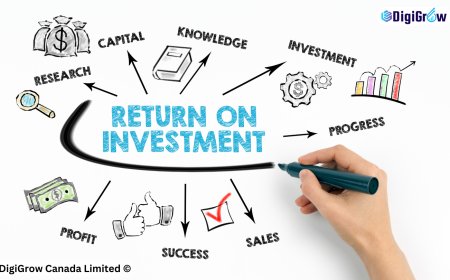
Improved ROI through targeted advertising
-
Smarter budget allocation
With access to data-based insights, brands can measure performance instantly and adjust strategies without waiting months to see what works. This agility becomes a massive competitive advantage.
-
-
Automation Is Transforming Digital Marketing Efficiency
Automation is no longer optional—it is a necessity for scale. From email workflows to ad optimization to CRM updates, automation allows businesses to grow without increasing operational burden.
Automation offers benefits such as:
-
24/7 lead nurturing
-
Consistent customer engagement
-
Reduced human error
-
Faster execution of complex marketing tasks
Platforms highlighted in Quixy’s digital transformation examples showcase how automated workflows dramatically improve efficiency and customer interactions.
As automation capabilities expand, marketing will become increasingly predictive and self-operating—freeing brands to focus on creativity and strategy.
-
-
AI and Machine Learning Are Powering Smarter Marketing Strategies
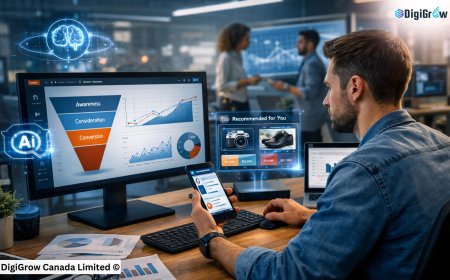
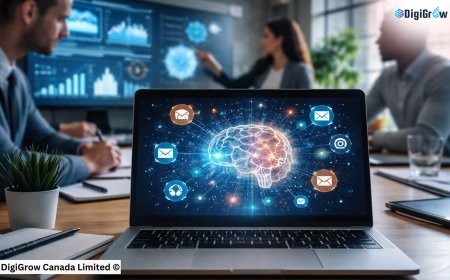
AI is rapidly transforming digital marketing. From content creation to predictive lead scoring, AI allows brands to deliver more intelligent, tailored, and impactful strategies.
Examples include:
-
AI-driven dynamic ads
-
Personalized product recommendations
-
Automated content generation
-
Smart audience segmentation
-
Predictive analytics for customer lifetime value
AI doesn’t just make marketing smarter—it makes it scalable.
To dive deeper into future marketing technologies, readers can explore DigiGrow’s in-depth article “Future-Proof Your Brand: Digital Marketing Trends 2025–2035,” which expands on how AI and automation are shaping long-term strategies:
By integrating AI into daily marketing workflows, brands can enhance performance with minimal effort.
-
-
New Technologies Are Redefining Customer Engagement Models
Customer engagement is evolving through transformative technologies like:
- AR and VR Experiences: Virtual try-ons, immersive shopping, and interactive learning will redefine how brands present products.
- Voice Search & Smart Assistants: With devices like Alexa and Google Home dominating households, optimizing for voice search is becoming extremely important.
- Conversational Commerce: AI chatbots on WhatsApp, Messenger, and websites are becoming powerful sales channels.
- Metaverse Branding: Virtual spaces are emerging as the next big playground for digital interaction, advertising, and brand presence.
Businesses that adopt these innovations early will gain a long-term competitive edge.
-
Omnichannel Integration Will Become a Requirement, Not a Strategy
Customers now interact with brands across multiple touchpoints—from social media to email to websites to in-store experiences. Next-gen marketing ensures these touchpoints are synchronized and seamless.
Benefits Include:
-
Consistent brand messaging
-
Higher customer trust
-
Improved customer retention
-
Enhanced user experience
Integrated marketing will allow businesses to track customer behavior across all channels and provide cohesive, personalized engagement throughout the sales funnel.
-
-
Future Marketing Will Be Privacy-First and Customer-Centric
With rising concerns about data usage, privacy-first strategies will redefine marketing. Google’s phaseout of third-party cookies marks the beginning of a more secure digital advertising era.
Next-gen marketing will focus on:
-
First-party data collection
-
Ethical targeting
-
Transparent communication
-
Consent-based personalization
Brands that prioritize user privacy will build stronger trust and long-term customer loyalty.
-
-
Businesses That Adapt Now Will Survive Future Market Disruptions
Whether it’s AI, automation, economic shifts, or new social platforms, disruptions will continue. The businesses that survive—and thrive—will be those that embrace continuous digital transformation.
Next-gen marketing is no longer a luxury. It's the foundation for:
-
Brand resilience
-
Customer loyalty
-
Scalable growth
-
Long-term market relevance
DigiGrow Canada Limited helps businesses adapt by providing smart, future-ready Digital Marketing Services designed for the next decade.
-
-
Conclusion & Call-to-Action
The next decade will reshape digital marketing as we know it. AI, automation, data-driven decision-making, immersive tech, and omnichannel ecosystems will redefine how brands operate. Companies that invest in next-gen marketing today will future-proof their brand, outperform competitors, and unlock new growth opportunities.
If you want expert guidance in preparing your business for the future of digital marketing, DigiGrow is here to help. Schedule a Consultation on WhatsApp.
Stay ahead of the competition. Start building your next-gen marketing strategy today.
What's Your Reaction?
 Like
0
Like
0
 Dislike
0
Dislike
0
 Love
0
Love
0
 Funny
0
Funny
0
 Angry
0
Angry
0
 Sad
0
Sad
0
 Wow
0
Wow
0