



























How Digital Marketing in 2026 Is Transforming Business Success
Discover the benefits of digital marketing in 2026, key trends, AI-driven strategies, and how businesses can grow with smarter, data-backed marketing.


Digital marketing in 2026 is no longer just a promotional tool—it is the foundation of modern business growth. As consumer behavior becomes increasingly digital-first, companies must rely on data, automation, and intelligent systems to remain competitive. From AI-driven campaigns to hyper-personalized customer journeys, digital marketing has evolved into a performance-driven ecosystem that directly impacts revenue and brand authority. Businesses that understand and apply its benefits strategically are scaling faster, building stronger customer relationships, and achieving measurable success in today’s fast-moving marketplace.
In this guide, we’ll explore the key benefits of digital marketing in 2026 and why it has become indispensable for businesses of all sizes.
Benefits of Digital Marketing in 2026
Digital marketing in 2026 offers far more than online visibility. It delivers measurable growth, smarter decision-making, and long-term competitive advantage. Let’s explore the most impactful benefits shaping business success today.


Data-Driven Decision Making and Predictive Growth
One of the most powerful advantages of digital marketing in 2026 is the ability to make decisions based on real-time data rather than assumptions. Businesses now have access to advanced analytics tools that track customer interactions, engagement patterns, purchase behaviors, and conversion pathways with remarkable precision. This data allows companies to understand what works and what doesn’t, enabling them to adjust campaigns instantly for better results.
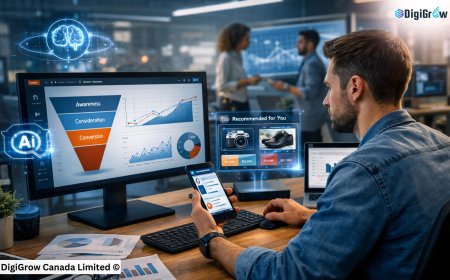
Artificial intelligence has elevated this benefit even further. Predictive analytics tools can forecast customer behavior, identify emerging trends, and suggest optimized strategies before competitors react. According to industry insights shared in this comprehensive analysis on digital marketing trends in 2026 by Digital Trainee, AI-powered marketing systems are transforming campaigns into measurable revenue engines rather than experimental branding exercises.
For businesses looking to maximize performance through strategic content planning, these high-converting content marketing secrets by Digigrow Canada Limited provide actionable insights into turning traffic into consistent conversions. The shift toward data-backed marketing ensures that every investment contributes directly to growth.


Hyper-Personalization That Builds Loyalty
In 2026, personalization has moved from being a competitive advantage to being a basic expectation. Consumers now expect brands to understand their preferences, anticipate their needs, and deliver tailored experiences across every platform.
Digital marketing technologies make this possible through machine learning, behavioral tracking, and customer data platforms. Websites adapt dynamically based on user behavior. Email campaigns automatically adjust messaging based on past purchases. Advertisements align with browsing history and interests. This level of personalization increases customer satisfaction while significantly boosting engagement and repeat purchases.
As highlighted in this detailed guide on what digital marketing looks like in 2026 by Fillip Technologies, personalized experiences powered by automation are among the strongest drivers of long-term brand loyalty and higher customer lifetime value.
When customers feel understood, they are more likely to trust the brand, return for future purchases, and recommend it to others. In a crowded digital landscape, that loyalty becomes invaluable.
Measurable and Cost-Effective Marketing Performance
Unlike traditional advertising channels that often rely on estimated reach and broad targeting, digital marketing in 2026 offers complete transparency. Every click, impression, conversion, and sale can be tracked with accuracy. This level of measurement empowers businesses to optimize their budgets and eliminate wasteful spending.
Small and medium-sized businesses benefit significantly from this cost efficiency. With the right strategy, even limited budgets can generate substantial returns through search engine optimization, performance advertising, and strategic content marketing. Campaigns can be paused, adjusted, or scaled instantly based on performance data.
This flexibility reduces financial risk while increasing marketing effectiveness. Instead of committing to long-term advertising contracts with uncertain results, businesses can continuously refine their approach to maximize impact. The result is a smarter, leaner, and more profitable marketing strategy.
Stronger Multi-Channel Customer Engagement
Consumers in 2026 interact with brands across multiple digital touchpoints. They may discover a product through social media, research it through search engines, read reviews, watch videos, and finally make a purchase after receiving a targeted email offer. Digital marketing integrates these channels into a cohesive customer journey.
An omnichannel strategy ensures consistency in messaging and branding while allowing businesses to track and nurture prospects at every stage. This unified approach strengthens trust and improves conversion rates. Customers no longer experience disconnected marketing messages; instead, they move seamlessly through a guided journey.
Businesses that invest in integrated digital strategies build stronger relationships and maintain higher engagement levels. If you’re looking to develop a comprehensive, multi-channel strategy tailored to your business goals, you can connect with experts directly through Digigrow. Strategic coordination across platforms is what separates modern growth-driven brands from those struggling to stay visible.
Competitive Advantage Through Innovation
Innovation defines digital marketing in 2026. Emerging technologies such as conversational AI, voice search optimization, interactive video, and augmented reality are reshaping how brands communicate with audiences. Businesses that adopt these tools early gain a significant competitive edge.
AI chatbots now handle customer inquiries instantly, improving response time and satisfaction. Voice search optimization ensures brands remain visible as more consumers rely on smart devices. Interactive content keeps users engaged longer, increasing the likelihood of conversion. Automation tools streamline workflows, allowing marketing teams to focus on strategic growth rather than repetitive tasks.
Companies that resist innovation risk becoming outdated. On the other hand, businesses that embrace emerging technologies position themselves as forward-thinking leaders in their industries. This perception alone can significantly impact customer trust and market share. Digital marketing in 2026 is not just about being online; it is about staying ahead of change.
Digital marketing in 2026 has evolved into a sophisticated, data-driven growth engine. From predictive analytics and hyper-personalization to measurable ROI and multi-channel integration, its benefits are undeniable. Businesses that invest in strategic digital marketing are not only increasing visibility but also building lasting customer relationships and sustainable revenue streams.
The future belongs to companies that adapt, innovate, and make informed decisions backed by real data. Whether you are a startup aiming for rapid growth or an established brand seeking market expansion, embracing modern digital marketing strategies is essential.
Ready to elevate your digital presence and drive measurable results? Visit Digigrow today, Or schedule a consultation via WhatsApp.
Take the next step toward smarter growth and long-term success.
What's Your Reaction?
 Like
0
Like
0
 Dislike
0
Dislike
0
 Love
0
Love
0
 Funny
0
Funny
0
 Angry
0
Angry
0
 Sad
0
Sad
0
 Wow
0
Wow
0