


































How AI Is Changing Digital Marketing: Tools, Benefits, and Risks
Discover how AI is transforming digital marketing with powerful tools, real benefits, and key risks, including personalization, analytics, automation, and data privacy.

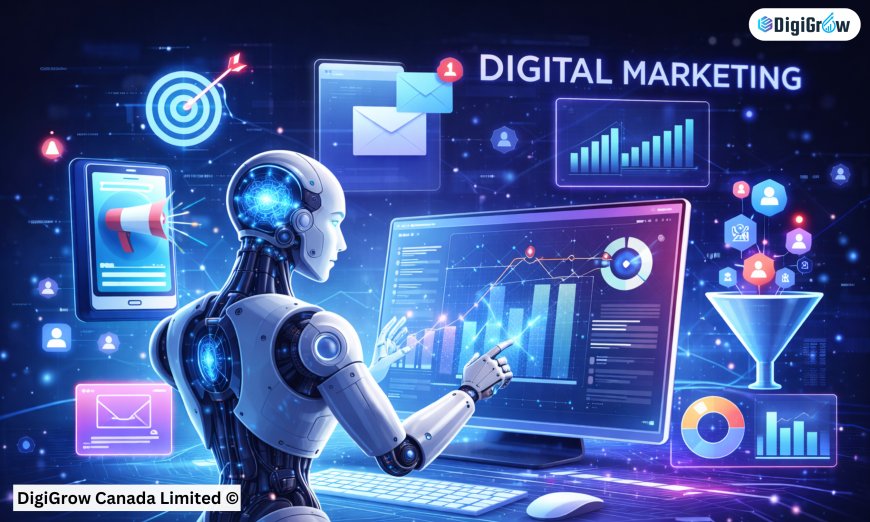
Artificial Intelligence (AI) has rapidly evolved from an experimental technology into a foundational component of modern digital marketing. As businesses compete in increasingly data-driven and customer-centric markets, AI offers the ability to analyze massive datasets, automate decision-making, personalize experiences, and predict consumer behavior with unprecedented accuracy. From chatbots and recommendation engines to predictive analytics and automated content creation, AI is reshaping how brands communicate with audiences and measure success.
The integration of AI into digital marketing is not merely a technological upgrade; it represents a strategic transformation. Marketers are shifting from intuition-based approaches to evidence-based strategies powered by machine learning algorithms. While AI delivers significant benefits such as efficiency, scalability, and enhanced personalization, it also introduces risks related to data privacy, algorithmic bias, and over-automation. This article explores how AI is changing digital marketing by examining key tools, major benefits, and the risks organizations must manage to use AI responsibly and effectively.
Understanding AI in Digital Marketing


Artificial Intelligence refers to computer systems capable of performing tasks that typically require human intelligence, including learning, reasoning, problem-solving, and language understanding. In digital marketing, AI is primarily driven by machine learning (ML), natural language processing (NLP), computer vision, and predictive analytics.
Machine learning algorithms analyze historical and real-time data to identify patterns and improve performance over time. NLP enables machines to understand, generate, and respond to human language, making technologies like chatbots, voice search optimization, and sentiment analysis possible. Predictive analytics allows marketers to forecast future trends, customer behavior, and campaign outcomes.
By integrating these technologies, AI-powered marketing systems can autonomously optimize campaigns, personalize content at scale, and support strategic decision-making. As a result, AI has become an essential tool for organizations seeking to remain competitive in the digital economy.


1. AI-Powered Analytics and Data Insights
One of the most impactful applications of AI in digital marketing is advanced data analytics. AI tools can process vast amounts of structured and unstructured data from websites, social media platforms, customer relationship management (CRM) systems, and advertising networks.
Platforms such as Google Analytics 4, Adobe Analytics, and AI-driven business intelligence tools provide real-time insights into customer journeys, engagement metrics, and conversion patterns. These tools help marketers identify high-performing channels, understand audience behavior, and make data-informed decisions faster than traditional analytical methods.
2. Customer Segmentation and Targeting
AI enables highly granular customer segmentation by analyzing demographic data, browsing behavior, purchase history, and engagement patterns. Unlike traditional segmentation methods, which rely on static criteria, AI-driven segmentation is dynamic and continuously updated.
Predictive models can identify high-value customers, predict churn, and recommend tailored marketing strategies for each segment. This precision improves targeting accuracy, reduces wasted ad spend, and increases return on investment (ROI).
3. Personalization Engines
Personalization is one of the most visible ways AI is changing digital marketing. AI-driven personalization engines deliver customized content, product recommendations, and offers to individual users in real time.
E-commerce platforms use AI to recommend products based on previous purchases and browsing behavior, while content platforms personalize email campaigns, website layouts, and advertisements. This level of personalization enhances customer satisfaction and significantly increases conversion rates.
4. Chatbots and Conversational AI
AI-powered chatbots and virtual assistants have transformed customer interaction and support. Using NLP and machine learning, chatbots can answer frequently asked questions, guide users through purchasing processes, and provide 24/7 customer support.
In digital marketing, chatbots are also used for lead generation, customer engagement, and feedback collection. They reduce operational costs while improving response times and customer experience.
5. Automated Content Creation and Optimization
AI tools can generate and optimize content for blogs, emails, advertisements, and social media platforms. Content generation tools analyze existing data to create relevant, keyword-optimized text aligned with brand tone and audience preferences.
AI also assists in content optimization by suggesting headlines, keywords, posting schedules, and formats that are most likely to perform well. This enables marketers to scale content production while maintaining consistency and relevance.
6. Programmatic Advertising
Programmatic advertising uses AI algorithms to automate the buying and placement of digital ads in real time. These systems evaluate user data, context, and bidding conditions to display ads to the most relevant audiences at the optimal moment.
AI-driven programmatic advertising improves efficiency, targeting precision, and campaign performance while minimizing manual intervention.
Benefits of AI in Digital Marketing
1. Enhanced Efficiency and Automation
AI automates repetitive and time-consuming marketing tasks such as data analysis, reporting, ad bidding, and email scheduling. This allows marketing teams to focus on strategic planning, creativity, and relationship building. Automation also reduces human error and ensures consistency across campaigns, improving overall operational efficiency.
2. Improved Customer Experience
By enabling real-time personalization, AI enhances customer experiences across digital touchpoints. Consumers receive content and offers that align with their interests, needs, and behaviors, leading to higher engagement and satisfaction. AI-driven customer support tools further enhance experiences by providing instant responses and resolving issues quickly.
3. Data-Driven Decision Making
AI transforms raw data into actionable insights. Predictive analytics helps marketers anticipate trends, optimize budgets, and measure campaign effectiveness more accurately. With AI, decision-making becomes proactive rather than reactive, allowing organizations to stay ahead of market changes.
4. Scalability and Consistency
AI allows businesses to scale marketing efforts without proportionally increasing costs. Personalized campaigns can be delivered to millions of users simultaneously while maintaining consistent messaging and quality. This scalability is especially valuable for global brands managing multiple markets and channels.
5. Higher Return on Investment
By optimizing targeting, personalization, and performance tracking, AI improves campaign effectiveness and reduces wasted resources. As a result, organizations often experience higher conversion rates, increased customer lifetime value, and improved ROI.
Risks and Challenges of AI in Digital Marketing
1. Data Privacy and Security Concerns
AI systems rely heavily on consumer data, raising concerns about data privacy, security, and regulatory compliance. Improper data handling can lead to breaches, legal penalties, and loss of customer trust. Organizations must comply with data protection regulations such as GDPR and implement robust cybersecurity measures to safeguard consumer information.
2. Algorithmic Bias and Ethical Issues
AI algorithms learn from historical data, which may contain biases. If not carefully monitored, AI systems can reinforce discriminatory practices in targeting, pricing, or content delivery. Ethical AI implementation requires transparency, regular audits, and diverse datasets to minimize bias and ensure fair treatment of all consumers.
3. Over-Automation and Loss of Human Touch
While automation improves efficiency, excessive reliance on AI can reduce authenticity and emotional connection in marketing communications. Customers may perceive interactions as impersonal or scripted if human oversight is absent. Successful digital marketing strategies balance AI-driven automation with human creativity, empathy, and judgment.
4. High Implementation Costs and Complexity
Implementing AI solutions requires significant investment in technology, data infrastructure, and skilled personnel. Small and medium-sized businesses may face challenges in adopting advanced AI tools due to cost and complexity. Additionally, integrating AI systems with existing platforms can be technically demanding and time-consuming.
5. Dependence on Data Quality
AI performance is directly tied to data quality. Inaccurate, incomplete, or outdated data can lead to flawed insights and ineffective marketing decisions. Organizations must establish strong data governance practices to ensure data accuracy, relevance, and consistency.
The Future of AI in Digital Marketing
As AI technologies continue to evolve, their role in digital marketing will expand further. Advances in generative AI, voice search optimization, augmented reality, and predictive modeling will create new opportunities for engagement and innovation.
Future digital marketing strategies will increasingly rely on AI-driven insights to deliver hyper-personalized experiences, automate complex decision-making, and enhance customer relationships. However, success will depend on responsible AI use, ethical considerations, and continuous human oversight.
Artificial Intelligence is fundamentally changing digital marketing by transforming how organizations analyze data, engage customers, and optimize campaigns. AI-powered tools enhance efficiency, personalization, and decision-making, enabling marketers to deliver more relevant and impactful experiences at scale.
Despite its many benefits, AI also presents challenges related to data privacy, ethical concerns, and over-automation. To maximize value and minimize risk, organizations must adopt AI thoughtfully, ensuring transparency, data security, and a balanced integration of human and machine intelligence. As digital marketing continues to evolve, AI will remain a critical driver of innovation and competitive advantage for businesses willing to embrace its potential responsibly.
What's Your Reaction?
 Like
0
Like
0
 Dislike
0
Dislike
0
 Love
0
Love
0
 Funny
0
Funny
0
 Angry
0
Angry
0
 Sad
0
Sad
0
 Wow
0
Wow
0