





























Future-Proof Your Brand: Digital Marketing Trends 2025–2035
Discover the top digital marketing trends for 2025–2035. From AI to immersive experiences, future-proof your brand with actionable insights.


Introduction
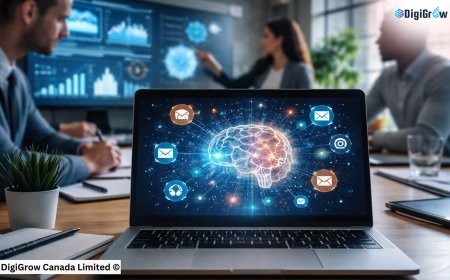
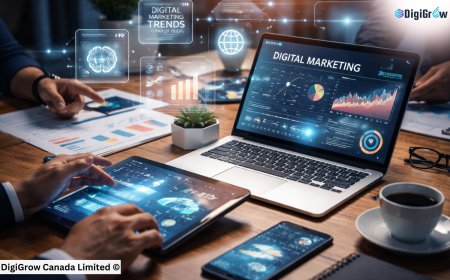
The digital marketing landscape is evolving faster than ever before. From AI-driven campaigns to immersive AR experiences, businesses need to stay ahead of trends to remain competitive. Companies that anticipate shifts in technology, consumer behavior, and digital channels will be better positioned to capture market share and maintain brand loyalty. In this article, we will explore the most significant trends shaping digital marketing over the next decade (2025–2035), why they matter, and how your brand can adapt to stay relevant. Understanding these changes now allows marketers to future-proof strategies, optimize investments, and engage customers effectively.
Significance of Emerging Digital Marketing Trends
1. AI and Predictive Analytics Transforming Marketing Decisions
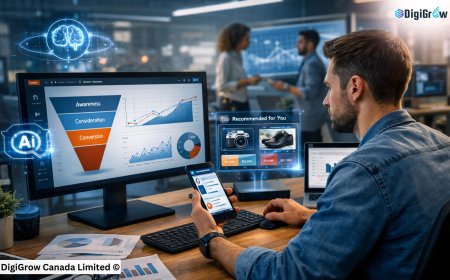
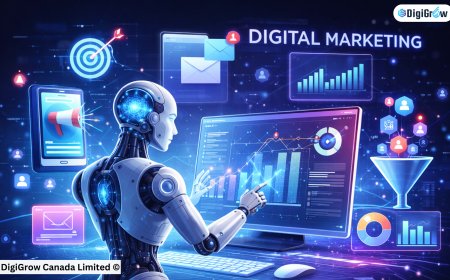
Artificial Intelligence (AI) continues to redefine how marketers understand consumer behavior. Predictive analytics leverages data to anticipate customer preferences, personalize content, and optimize campaigns in real-time. By analyzing patterns from past interactions, brands can forecast which products or offers will resonate most, increasing conversion rates and ROI. As highlighted by SQROOT, Direct-to-Consumer (D2C) brands leveraging AI gain a competitive edge by predicting customer needs before they arise.
Moreover, AI automates decision-making, reducing reliance on intuition alone. From optimizing ad spend to recommending products, AI-driven marketing ensures campaigns are both efficient and targeted, making it an essential trend for 2025–2035.


2. Hyper-Personalization Across All Channels
Modern consumers expect brands to deliver highly personalized experiences. Hyper-personalization uses AI, machine learning, and behavioral data to tailor content, recommendations, and offers at an individual level. Personalized marketing has been shown to improve engagement, boost customer satisfaction, and increase lifetime value.
Unlike generic segmentation, hyper-personalization allows brands to dynamically adapt messaging in real-time, reflecting the user’s interests, purchase history, and browsing behavior. Integrating this approach across social media, email, apps, and websites ensures a seamless experience that fosters loyalty.
3. Omnichannel Marketing Integration
A cohesive omnichannel strategy is crucial for reaching customers wherever they are. Modern consumers interact with brands across multiple platforms—social media, email, e-commerce, physical stores, and mobile apps. Businesses that unify these channels deliver consistent messaging, increasing trust and conversions.


For instance, a customer might discover a product on Instagram, research it on your website, and make the purchase via a mobile app. Ensuring a frictionless experience across these touchpoints is key. For more insights on integrated strategies, explore our article on digital shifts shaping the next decade.
4. Voice and Visual Search Optimization
Voice assistants and visual search tools are rapidly changing how consumers discover products. With the rise of smart speakers, AI-driven search, and image-based platforms, brands must optimize content to remain discoverable.
Voice search requires conversational keyword strategies, while visual search demands high-quality images and accurate tagging. Brands embracing these technologies improve accessibility, reach younger audiences, and stand out in an increasingly competitive digital landscape.
5. Privacy-First Marketing and Ethical Data Use
Consumer privacy is no longer optional. Regulations such as GDPR, CCPA, and emerging data protection laws have forced marketers to rethink data collection and usage. Future-proof brands must prioritize transparent, consent-driven marketing.
Ethical data practices foster trust, enhance reputation, and prevent legal penalties. Privacy-first marketing involves anonymizing data, securing customer information, and offering clear opt-ins for communications. As Infosys explains, brands that embrace ethical marketing are better positioned for long-term growth while maintaining consumer confidence.
6. Immersive Technologies: AR, VR, and the Metaverse
Augmented Reality (AR), Virtual Reality (VR), and metaverse platforms offer unique opportunities to engage customers. Brands can create interactive shopping experiences, virtual events, or gamified content that strengthens emotional connections.
For example, AR allows customers to visualize furniture in their homes before purchasing, while VR can simulate immersive product demonstrations. Metaverse experiences offer next-level engagement for tech-savvy audiences. Early adoption of these tools enables differentiation and brand memorability.
7. Sustainability and Purpose-Driven Marketing
Consumers increasingly align with brands that share their values. Marketing that highlights sustainability initiatives, ethical practices, and social responsibility resonates with modern audiences.
Purpose-driven marketing drives loyalty and encourages word-of-mouth promotion. Brands must integrate sustainability into messaging and operations to remain relevant in 2025–2035, positioning themselves as responsible market leaders.
8. Marketing Automation for Efficiency and Scalability
Automation streamlines repetitive marketing tasks, from email campaigns to social media scheduling. AI-driven content generation and automated workflows improve efficiency while maintaining personalization.
Automation is crucial for scaling campaigns across multiple channels without sacrificing quality. It frees marketing teams to focus on strategy, creativity, and customer engagement while ensuring operational efficiency.
9. Advanced Analytics for Continuous Optimization
Data-driven decision-making is foundational to modern marketing. Advanced analytics tools allow marketers to track performance, test campaigns, and continuously optimize for better outcomes. Predictive, prescriptive, and real-time analytics ensure resources are used effectively, and strategies adapt to market changes.
Brands leveraging these tools can identify trends, measure ROI, and refine messaging to maximize impact, making analytics an indispensable component of future marketing strategies.
10. Social Commerce and Interactive Content
Social media platforms are increasingly becoming marketplaces themselves. Social commerce enables users to purchase products directly from platforms like Instagram, TikTok, and Facebook.
Interactive content—polls, quizzes, AR filters, and shoppable videos—boosts engagement and drives conversions. Brands must blend content marketing with commerce capabilities to meet the evolving expectations of digital consumers.
Digital marketing will continue to evolve rapidly from 2025 to 2035. AI, hyper-personalization, omnichannel integration, immersive experiences, ethical data use, and automation represent key areas that brands cannot ignore. Adopting these trends early ensures relevance, improves customer experience, and secures a competitive advantage.
To future-proof your brand, stay informed about emerging trends and implement strategies that prioritize personalization, efficiency, and ethical practices. Explore related insights on digital shifts shaping the next decade or schedule a consultation with DigiGrow: https://digigrow.ca/contact-us.php
What's Your Reaction?
 Like
0
Like
0
 Dislike
0
Dislike
0
 Love
0
Love
0
 Funny
0
Funny
0
 Angry
0
Angry
0
 Sad
0
Sad
0
 Wow
0
Wow
0