






























Unlocking Business Growth with Integrated Digital Marketing Strategies
Discover how integrated digital strategies help small businesses enhance ROI, streamline operations, and achieve faster growth. Learn expert insights with DigiGrow Canada.


In today’s rapidly evolving digital era, businesses can no longer rely on isolated marketing efforts to drive growth. Customers interact with brands across multiple touchpoints — websites, social media, emails, ads, and mobile apps. To succeed, companies must adopt integrated digital strategies that unify all marketing channels into a cohesive system.
An integrated approach ensures consistent messaging, smarter use of data, and improved customer experiences that ultimately boost conversions and brand loyalty. According to a BizBot report, businesses that implement digital integration experience up to 40% faster growth than those relying on fragmented tactics.
This article explores the benefits of integrated digital marketing and how small to mid-sized businesses can leverage it to scale sustainably in 2025 and beyond.


Benefits of Integrated Digital Strategies
1. Enhanced Customer Experience Across All Touchpoints
Modern customers expect seamless interactions, whether they discover your brand through Google, an Instagram ad, or an email newsletter. An integrated digital strategy connects all these experiences under one brand voice.
When marketing channels work together, they deliver a consistent and personalized journey that improves trust and engagement. For example, integrating CRM data with email automation tools can help tailor product recommendations based on customer behavior.
As highlighted in Abacus Marketing’s article on integrated marketing, alignment between content, social media, and paid campaigns boosts message clarity and ensures every customer feels valued and understood.


Businesses that prioritize customer-centric integration see higher retention rates and longer lifetime value — two metrics that define sustainable growth.
2. Data-Driven Decision Making and Better ROI
One of the biggest advantages of integration is the ability to collect, connect, and interpret data from all digital platforms. With the right analytics tools, businesses can track how each marketing effort contributes to overall ROI.
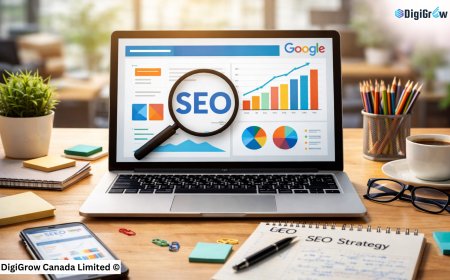
For instance, when SEO insights are combined with paid advertising and social media performance, marketers can identify which content drives the most conversions and allocate resources accordingly.
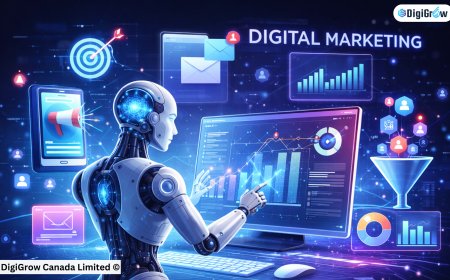
At DigiGrow Canada Limited, we emphasize the use of advanced digital marketing services that combine data analytics, AI tools, and automation to optimize campaign performance. This approach ensures smarter spending, measurable impact, and continuous improvement.
Want to learn how to optimize your marketing efforts for measurable returns? Check out our related post on Master Digital Marketing Strategies for Success in Today’s Digital Landscape.
By unifying analytics across channels, your business gains a 360-degree view of performance — making every marketing decision data-backed, not guesswork.
3. Stronger Brand Identity and Consistent Messaging
Consistency builds credibility. An integrated strategy ensures that every blog post, ad, and social media update communicates the same core message and tone.
When customers repeatedly encounter the same values and messaging, they develop deeper brand trust. For example, Apple’s seamless integration across its website, emails, and stores exemplifies how powerful a unified message can be.
A well-aligned strategy also prevents the common pitfall of sending mixed messages — something that often happens when different departments or agencies work independently.
By maintaining a consistent voice, businesses can strengthen recognition, increase engagement, and enhance their overall digital presence.
4. Efficient Resource Allocation and Cost Optimization
Running multiple marketing campaigns without integration often leads to wasted time and money. Each department might duplicate efforts, create overlapping content, or mismanage budgets.
Integrated strategies streamline workflows by connecting all teams through shared goals and unified platforms. Marketing automation and collaboration tools reduce redundancy, saving both time and operational costs.
According to BizBot’s insights on digital integration, companies that adopt an integrated digital approach report up to 30% savings on marketing spend — while achieving higher performance results.
By aligning strategy, execution, and measurement under one ecosystem, small businesses can compete with larger enterprises on efficiency and impact.
5. Greater Agility and Faster Adaptation to Market Changes
In the fast-paced digital landscape, consumer preferences and algorithms change overnight. Businesses that operate in silos often struggle to adapt quickly.
However, with integrated systems — from CRM to content marketing — teams can instantly analyze trends, pivot campaigns, and respond to customer feedback in real-time.
This flexibility is critical for small businesses competing in industries dominated by tech-savvy players. Integration makes your marketing agile, allowing you to test, learn, and scale faster.
With digital transformation becoming non-negotiable, businesses that connect their channels and data can stay ahead of market shifts, seize opportunities, and ensure long-term resilience.
Building an Integrated Digital Ecosystem
Implementing an integrated strategy doesn’t happen overnight — it’s a process that involves technology, alignment, and consistent optimization. Here’s how small businesses can start:
-
Unify your marketing platforms — Connect social media, CRM, and analytics tools under one system.
-
Develop a cohesive brand message — Ensure your voice, tone, and visual identity remain consistent across all digital touchpoints.
-
Leverage automation and AI — Use AI tools for personalization, data insights, and predictive analytics.
-
Align teams and objectives — Encourage collaboration between marketing, sales, and operations for unified execution.
-
Track and refine continuously — Measure KPIs across channels and adjust strategies based on performance.
Integrated digital strategies are not just about using technology — they’re about building a synchronized system where people, tools, and content work together to create value.
The Future of Business Growth Lies in Integration
As digital ecosystems evolve, integration will become the backbone of every successful business strategy. Companies that leverage unified marketing approaches will enjoy stronger customer relationships, smarter decision-making, and long-term profitability.
The digital age rewards those who adapt fast, connect deeply, and deliver consistently. Integrated strategies make that possible — turning small businesses into scalable, competitive brands.
For an in-depth look at how AI and automation enhance digital marketing, explore our blog on How Smart Brands Use AI to Win Customer Hearts.
Integrated digital strategies aren’t just a trend — they’re the future of business growth. They empower organizations to break silos, harness data effectively, and deliver meaningful customer experiences that convert.
By combining analytics, automation, and collaboration, businesses can scale faster while staying relevant in an ever-changing digital landscape.
Ready to transform your digital presence and achieve measurable growth?
Visit DigiGrow or schedule a consultation via WhatsApp to get expert advice tailored to your business goals today!
What's Your Reaction?
 Like
0
Like
0
 Dislike
0
Dislike
0
 Love
0
Love
0
 Funny
0
Funny
0
 Angry
0
Angry
0
 Sad
0
Sad
0
 Wow
0
Wow
0