































How Smart Brands Use AI to Win Customer Hearts
Discover how AI is revolutionizing personalized marketing at scale in 2025. Learn key strategies from DigiGrow Canada to improve engagement, retention, and ROI.


Introduction: The New Age of Intelligent Personalization
We’ve officially entered the Age of Intelligence in digital marketing—where data, automation, and AI work together to create hyper-personalized customer experiences at scale. Today, consumers expect brands to understand their needs, anticipate their desires, and deliver value at every digital touchpoint.
As we step into 2025, AI-driven personalization is not just an option—it’s a competitive necessity. Businesses that fail to personalize will find themselves invisible in an overcrowded digital space. On the other hand, brands that embrace AI and personalization will capture more engagement, loyalty, and revenue.
In this article, DigiGrow Canada Limited explores why personalized marketing at scale is so significant and the AI strategies for 2025 that will shape the next generation of digital marketing success.


1. What Is Personalized Marketing at Scale?
Personalized marketing at scale is the practice of using technology—especially Artificial Intelligence (AI) and Machine Learning (ML)—to deliver individualized customer experiences to thousands (or even millions) of people simultaneously.
Instead of generic mass marketing, AI allows brands to communicate one-to-one with each customer—showing the right message, at the right time, on the right platform. The result? More relevance, higher conversions, and stronger emotional connections.
For instance:


-
Netflix personalizes recommendations for over 250 million users using AI algorithms.
-
Amazon curates shopping suggestions unique to each buyer’s history.
-
Spotify’s “Discover Weekly” playlist is fully AI-personalized based on listening patterns.
Now, thanks to advanced data analytics and automation tools, small and medium-sized businesses (SMBs) can implement the same strategies affordably and effectively—especially with partners like DigiGrow Canada.
2. Why Personalization Matters More Than Ever in 2025
Customer expectations have skyrocketed. A 2024 Salesforce study found that 73% of consumers expect companies to understand their needs and preferences, and 76% get frustrated when this doesn’t happen.
The digital audience of 2025 is more selective, more tech-savvy, and less tolerant of irrelevant marketing. They crave meaningful experiences that make them feel seen, valued, and understood.
Personalization is the only way to deliver that—and at scale, it becomes a growth engine.
Key Benefits of Personalization at Scale:
-
Enhanced Engagement: Customers interact longer with brands that “get” them.
-
Improved Conversions: Personalized recommendations increase click-through and purchase rates.
-
Customer Retention: Personalized experiences foster trust and loyalty.
-
Higher ROI: Tailored marketing reduces wasted ad spend and increases efficiency.
For marketers, the ability to personalize at scale is what separates noise from value—and that’s where AI comes in.
3. The Role of AI in Scaling Personalization
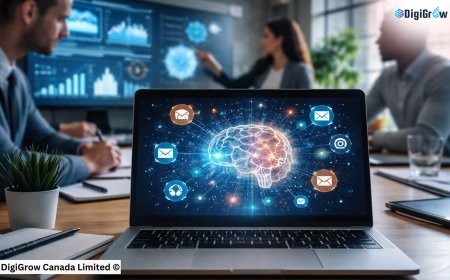
Artificial Intelligence is the engine that makes large-scale personalization possible. It automates the heavy lifting: collecting, analyzing, and acting on customer data in real time.
Here’s how AI transforms personalization into a scalable powerhouse:
a. Data Collection and Integration
AI aggregates data from multiple sources—social media, CRM, website analytics, purchase history, and even IoT devices. This creates a 360° customer view, enabling precise audience targeting.
b. Behavioral Analysis
Machine learning identifies patterns in how customers browse, buy, and interact. It segments audiences based on behavior, not just demographics—helping marketers craft content that resonates personally.
c. Predictive Modeling
AI forecasts future actions—like when a user might make their next purchase, cancel a subscription, or click an ad. Predictive analytics lets brands act before customers do.
d. Content Personalization
AI tools dynamically generate personalized ads, emails, and landing pages. For example, an AI system can change a website’s banner based on each visitor’s browsing history or location.
e. Real-Time Optimization
AI constantly tests and improves campaigns. Through A/B testing and data feedback loops, it identifies what works best—and scales those strategies instantly.
When used effectively, these AI systems enable even small businesses to achieve personalization once only possible for global brands.
4. AI Strategies for Personalized Marketing in 2025
Let’s explore the most impactful AI-driven strategies that brands should adopt in 2025 to deliver personalization at scale.
Predictive Analytics for Anticipating Customer Needs
Predictive AI models analyze historical and behavioral data to forecast what a customer will likely do next. This allows marketers to:
-
Recommend products before users start searching.
-
Identify customers at risk of churn.
-
Time campaigns for maximum impact.
For example, a skincare brand can predict when a customer’s moisturizer will run out and automatically trigger a reorder reminder or discount offer.
This proactive approach builds convenience, loyalty, and engagement—all driven by AI insights.
Dynamic Content Generation
AI tools like ChatGPT, Jasper, and Writesonic can generate personalized messages, blogs, or ad copy tailored to each audience segment. Dynamic content ensures that:
-
Every visitor sees website headlines relevant to their interests.
-
Emails are personalized by behavior (e.g., browsing history, cart activity).
-
Ads adapt messaging to fit user demographics and device type.
This combination of AI creativity and data-driven precision drives higher click-through rates and better customer satisfaction.
AI-Powered Segmentation and Targeting
Traditional segmentation—based on gender, location, or age—is outdated. AI enables micro-segmentation, clustering users by intent, psychographics, and purchase patterns.
Example: Two users might both be 30-year-old women from Toronto, but one buys organic products monthly while the other only shops during sales. AI recognizes these distinctions and tailors offers accordingly. The result? Campaigns that feel personal—because they are.
Chatbots and Conversational AI
AI-powered chatbots are transforming customer service and marketing simultaneously. They provide real-time, personalized assistance—answering queries, suggesting products, and collecting data 24/7.
By 2025, conversational AI will handle over 70% of customer interactions, according to Gartner. These tools not only reduce operational costs but also deliver personalization at scale, creating human-like conversations powered by machine learning.
Hyper-Personalized Email Marketing
Email remains one of the highest ROI channels—but AI takes it to the next level. Tools like Mailchimp’s AI or HubSpot’s smart send times ensure emails are delivered when users are most likely to open them.
AI can also:
-
Personalize subject lines and CTAs based on past interactions.
-
Send triggered sequences (e.g., cart abandonment reminders).
-
Adapt tone and visuals per segment.
The more personalized the message, the higher the engagement—proving that even in 2025, email is far from dead.
Voice Search and AI-Powered Recommendations
As voice assistants like Alexa and Google Assistant become ubiquitous, voice search optimization is now essential. AI helps brands adapt content for conversational queries and deliver personalized voice-based recommendations.
For example, a customer might ask, “What’s the best barber near me with online booking?” AI ensures your business ranks for those natural, local, and intent-driven searches.
AI and Visual Personalization
Computer vision—a subset of AI—can now personalize experiences based on images users upload or view. Fashion and beauty brands, for example, use AI to recommend products that match a user’s skin tone or body type.
This “visual AI” trend is booming in 2025, providing hyper-relevant and confidence-boosting shopping experiences.
5. Ethical AI and Data Privacy in Personalization
With great personalization comes great responsibility. AI thrives on data—but handling it ethically is crucial.
Marketers must prioritize:
-
Transparency: Clearly explain how customer data is collected and used.
-
Consent: Ensure users opt in to personalized experiences.
-
Security: Protect data using encryption and GDPR/CPPA-compliant practices.
-
Bias Reduction: Regularly audit AI algorithms to prevent unfair targeting.
At DigiGrow Canada, we believe personalization should enhance human experience—never exploit it. Ethical AI marketing builds trust, which is the foundation of lasting customer relationships.
6. Measuring Success: ROI of Personalized Marketing
The success of AI-powered personalization can be measured through metrics such as:
-
Customer Lifetime Value (CLV)
-
Engagement Rates (CTR, Open Rates, etc.)
-
Conversion and Retention Rates
-
Return on Ad Spend (ROAS)
-
Customer Satisfaction (NPS)
AI analytics dashboards simplify performance tracking by providing real-time insights and actionable recommendations.
If you’d like to learn more about measuring marketing performance, check out DigiGrow’s guide: The Benefits of Measuring ROI Effectively in Digital Marketing Campaigns
7. Future Trends: What’s Next for AI-Driven Personalization in 2025 and Beyond
As AI continues to evolve, so will personalized marketing. Expect to see innovations such as:
Neural Personalization Engines: These systems will simulate human thought patterns, allowing marketing platforms to “think” like customers.
Augmented Reality (AR) Experiences: Personalized AR shopping environments will let customers virtually “try” products—driven by AI data.
Emotion AI: AI capable of detecting emotion from voice, text, and facial expressions will tailor content based on real-time mood.
Cross-Device Synchronization: AI will unify experiences across phones, wearables, smart TVs, and even cars—creating a seamless personalized journey.
The brands that embrace these technologies early will dominate customer attention in 2025 and beyond.
8. Case Study: Personalized Marketing Success with DigiGrow Canada
At DigiGrow Canada Limited, we’ve helped numerous Canadian businesses achieve measurable success through AI-driven personalized marketing strategies.
Example: Local Salon Chain
-
Challenge: Declining repeat customers.
-
Solution: Implemented AI-powered email segmentation and loyalty automation.
-
Results:
-
+45% in repeat bookings
-
+62% increase in email open rates
-
3x ROI in three months
-
By combining data insights, predictive analytics, and ethical AI tools, DigiGrow helped the client build lasting connections at scale.
The Future Is Personalized—and Powered by AI
As we move deeper into 2025, personalization isn’t just about relevance—it’s about relationships. Artificial Intelligence is enabling businesses of all sizes to engage with customers in meaningful, human-centric ways—while doing so efficiently and at scale.
Brands that fail to adopt AI-powered personalization risk being left behind. But those that invest in smart strategies, ethical AI, and data-driven insights will thrive in the new digital era.
Whether you’re a startup or an established brand, now is the time to embrace AI personalization as your competitive edge.
What's Your Reaction?
 Like
0
Like
0
 Dislike
0
Dislike
0
 Love
0
Love
0
 Funny
0
Funny
0
 Angry
0
Angry
0
 Sad
0
Sad
0
 Wow
0
Wow
0